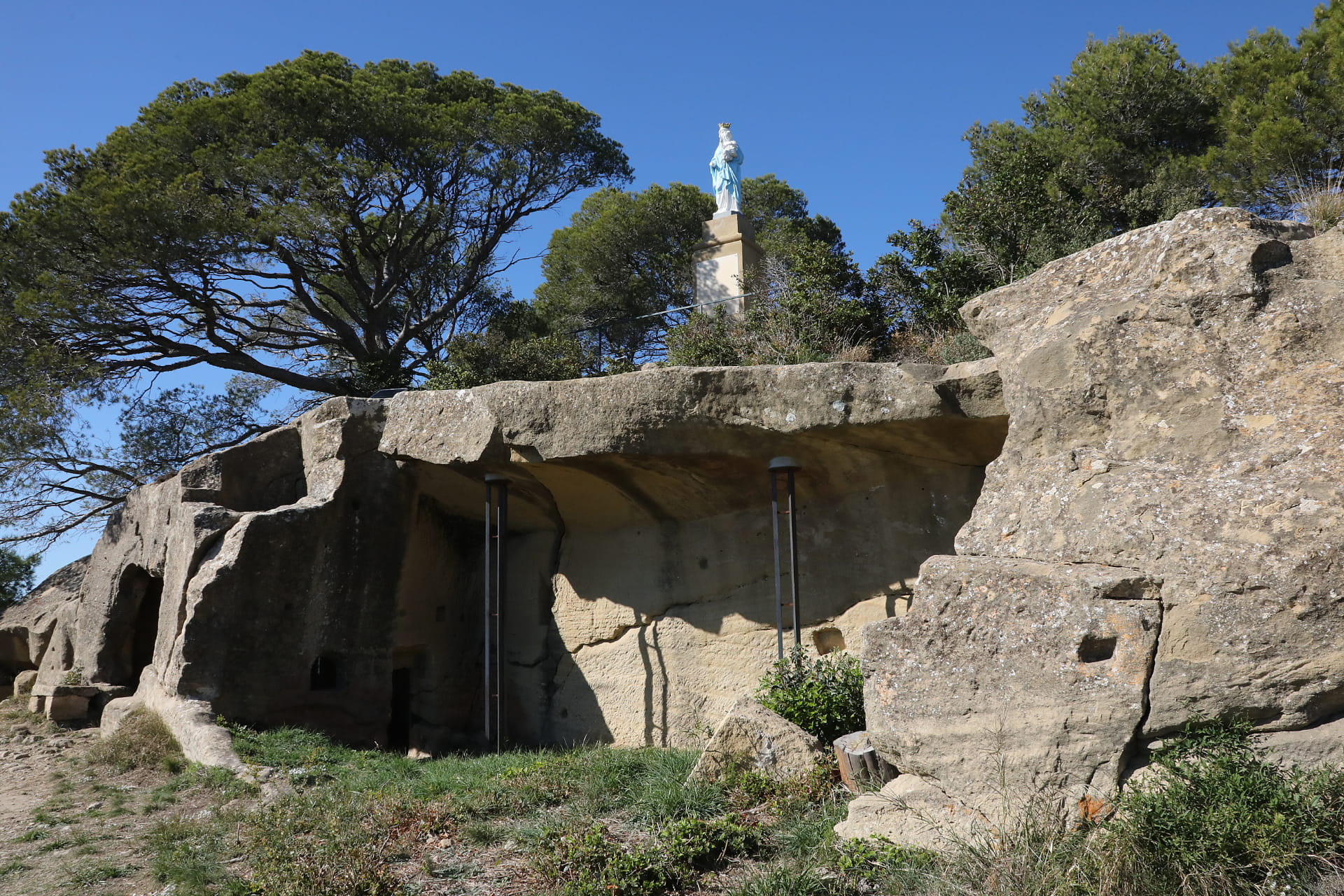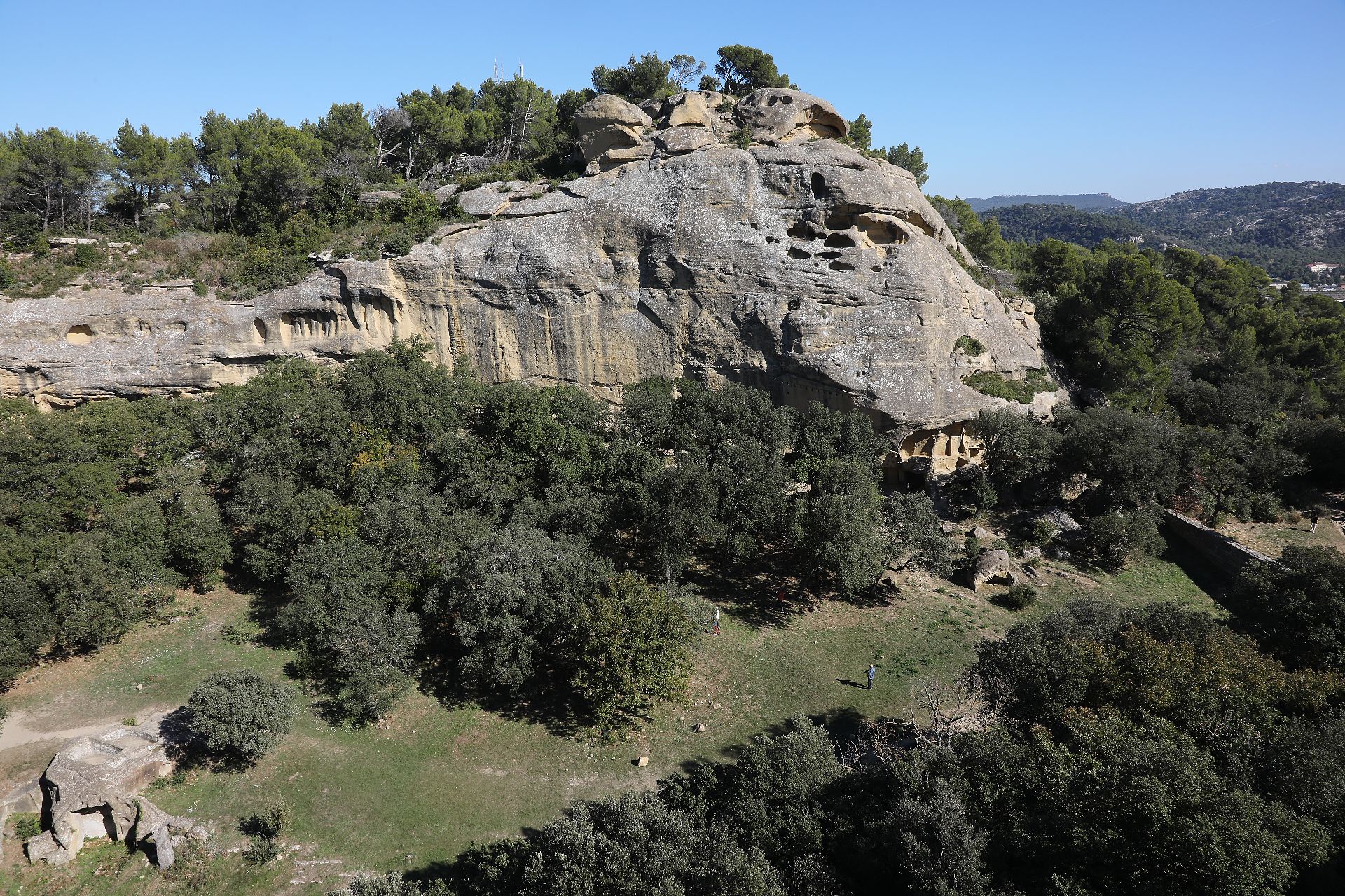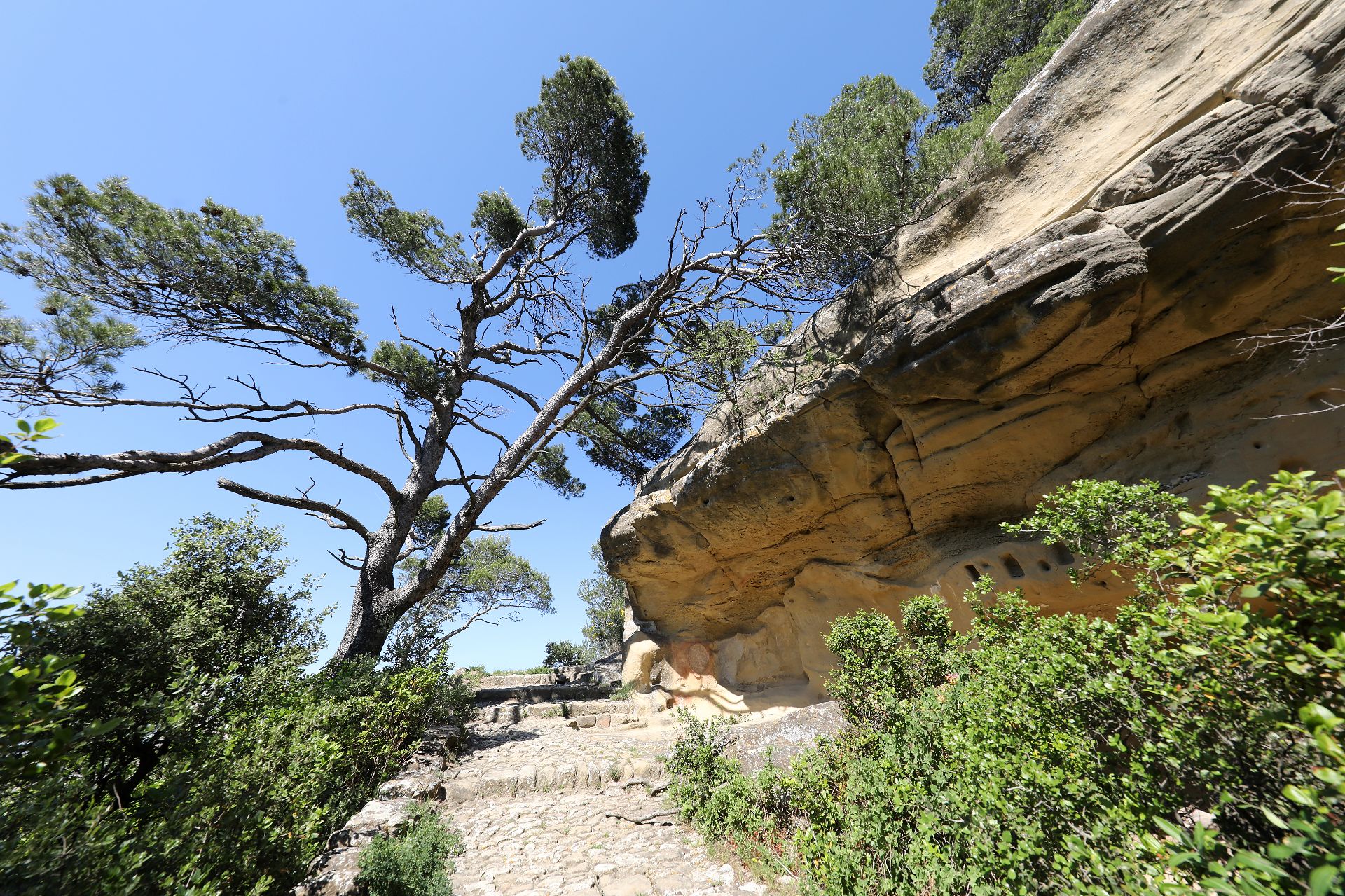
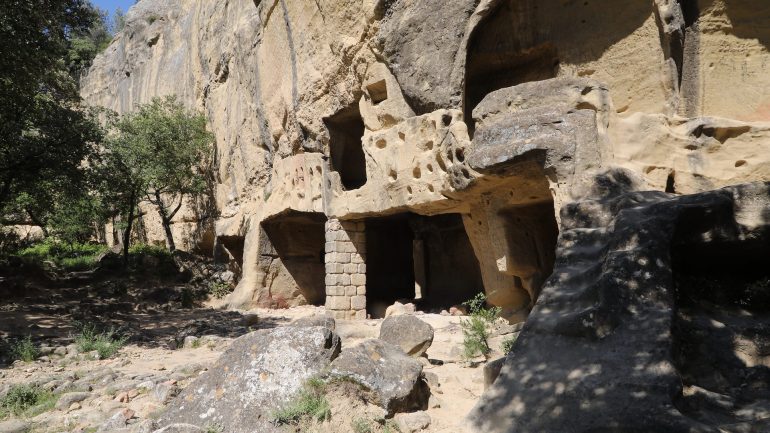
In the garrigue of Lamanon, rock rises abruptly among the pine trees. Then the cliff face hollows out, revealing façades carved directly into the stone, as though the mountain itself had been inhabited from within.
At first glance, one might mistake them for Neolithic shelters. Indeed, the earliest traces of human presence here date back to 3,500 BC. Yet within this archaeological forest, imbued with an almost mystical atmosphere, the troglodyte village of Calès took shape in the 12th century with the construction of a medieval castle. To assert their power and defend against attacks, the lords built their fortress from the local stone. As quarrymen extracted blocks, they carved out cavities that were soon transformed into dwellings. Thus emerged an ingenious castral village: sculpted thresholds, drainage channels, storage niches all hewn directly from the rock.
The Mysteries of the Rock
Destroyed by order of Henry III in the 15th century, the castle has vanished, yet the southeast gate and a surviving stretch of rampart still stand watch. Along the pathway, visitors discover silos, a communal granary, a former kitchen, and water collection systems. Carvings etched into the stone provoke curiosity: astrological signs, a solar circle, geometric figures. Listed since 1918 as natural sites and monuments of artistic character, the caves of Calès form a landscape where history seems suspended in time.
The Spiritual Heart of the Village
Built in the 12th century alongside the castle, the Romanesque church of Saint-Denis, located nearby, once again rises in its full splendor. When parishioners gradually moved down to the plain and constructed a new church, it was slowly abandoned. Today, fully restored, it watches over the site once more.
After seven years of restoration work, financed by the Department of Bouches-du-Rhône, Calès now offers a rare and mystical escape into medieval memory.